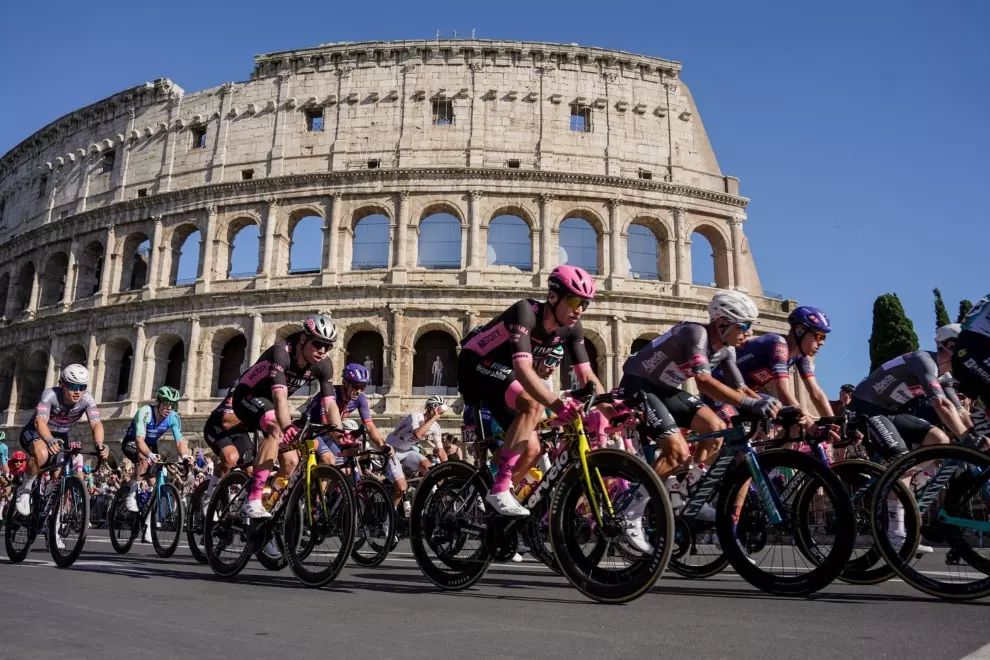
The Giro d'Italia doesn't do quiet. It does drama, suffering, unpredictable weather, and mountain stages that rearrange the hierarchy without warning. The 109th edition, running from May 8 to May 31, leans fully into that tradition. 21 stages, 3,459 kilometres, and just under 50,000 metres of elevation gain. Five mountain stages, one individual time trial, and a Dolomite queen stage that should decide everything. If you follow endurance sport at the pointy end, this is the three weeks you're scheduling your training rides around.
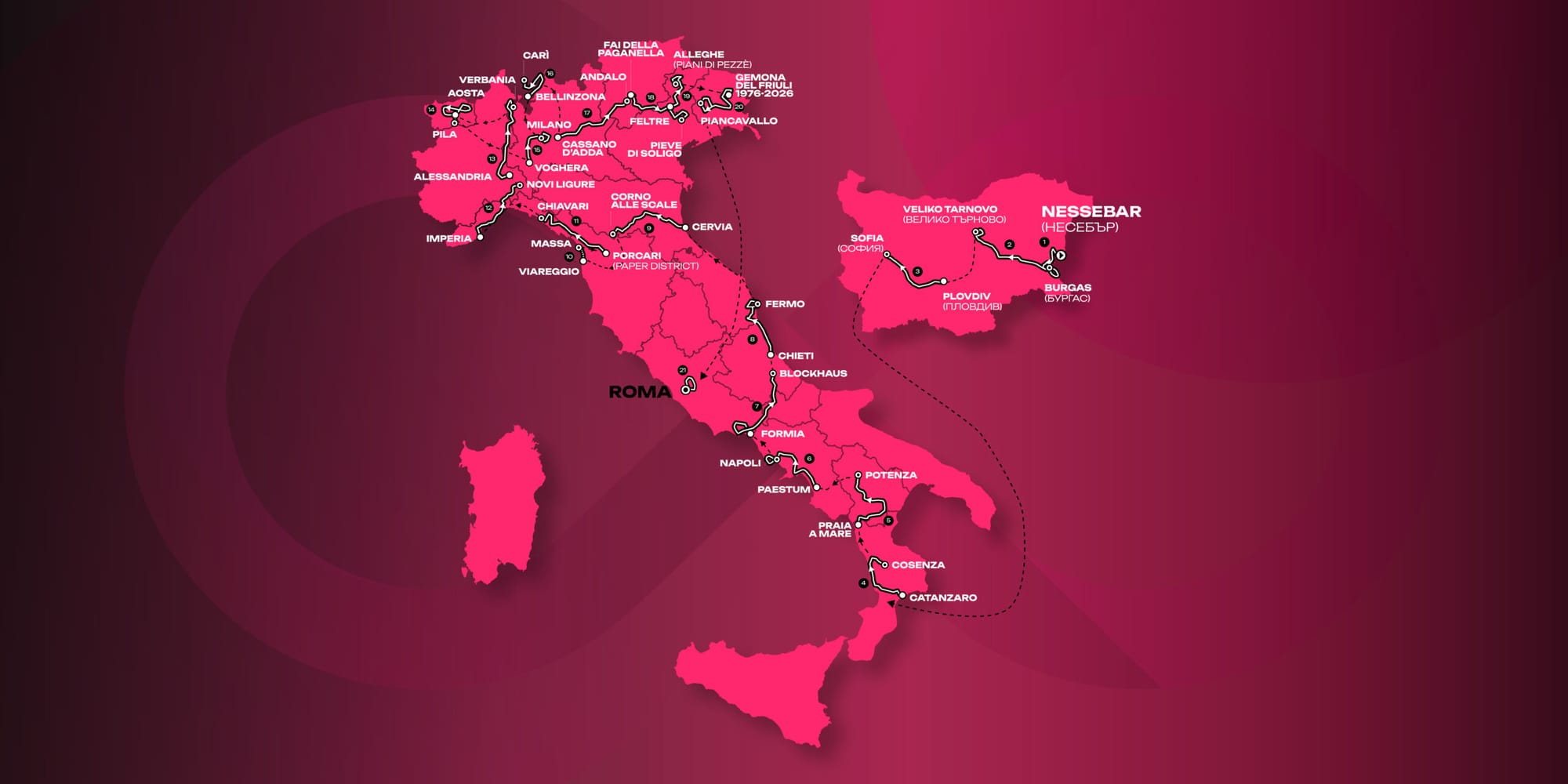
The Grande Partenza: Bulgaria
For the first time in the race's 109-year history, the Giro starts in Bulgaria. The Grande Partenza takes place in Nessebar, a historic coastal city on the Black Sea, marking the 16th time the Corsa Rosa has launched from foreign soil. Three stages in the Balkans, then the entire race caravan transfers to southern Italy for stage 4, which is why the UCI granted an additional rest day on May 11.
Three rest days in total, May 11, May 18, and May 25, give GC riders calculated recovery windows ahead of the decisive mountain blocks. The Bulgarian stages are sprint and puncher territory. Don't expect the maglia rosa situation to stabilise until the first summit finish on Italian roads.
Route Architecture: Where the Race Is Won
Understanding a Grand Tour requires reading the route as a structure, not a list of stages. The 2026 Giro is built around three pivotal moments.
Stage 7 — Formia to Blockhaus (244km)
The longest stage of the entire race. A massive Apennine mountain day finishing on the 14.5km Blockhaus climb, averaging over 8% with sections approaching 14%, comparable to Mont Ventoux in profile, and reputedly as windy. It arrives before the time trial, which means the classification could already be fractured before the race hits its second week. With 4,500 metres of vertical gain, much of the suffering is front-loaded before the final ascent even begins. Expect Visma to control the approach and Vingegaard to test his rivals on the final ramps.
Stage 10 — Viareggio to Massa (ITT, 42km)
The Giro's only individual time trial, arriving on May 19. At 42 kilometres along the Tuscan coast, it's a genuine GC differentiator, not a token effort. For pure climbers, the losses here need to be managed and recovered in the Dolomites. For a rider like Vingegaard who combines elite climbing with elite time trialling, this stage is a double opportunity to open a gap that forces everyone else's hand. Filippo Ganna is the class act against the clock and should take the stage win comfortably. What matters for the GC is the gaps behind him.
Stage 19 — Feltre to Alleghe (Queen Stage)
This is the tappone. The brutalist centrepiece of the entire race. Over 5,000 metres of elevation gain across the Passo Duran, Forcella Staulanza, Passo Giau, and Passo Falzarego before a stinging uphill finish at Piani di Pezzè, 4.9km at 9.8%. The Passo Giau is the Cima Coppi, the highest point of the 2026 edition: a 9.9km ascent reaching 2,233m altitude, tackled via its toughest face with gradients ranging from 9.3% to 14%. Anyone still within striking distance of the pink jersey by stage 19 will be forced to answer that climb at race pace. This is where the Giro ends, even if Rome is still two days away.
Stage 20 — Double Piancavallo
The penultimate stage features a final circuit of approximately 53km with a double ascent of Piancavallo, 14.4km averaging 7.8%, the last major obstacle before Rome. If the queen stage produces a clear winner, stage 20 is the consolidation. If not, it's the final opportunity for a GC reversal.
The GC Contenders
Jonas Vingegaard — Visma | Lease a Bike
Vingegaard is the clear favourite, and it isn't particularly close. This is his first Giro start, and the motivation is straightforward: he's won the Tour de France twice and the Vuelta a España, but the Giro has always been the missing piece. His 2026 form has been dominant, overall victories at Paris-Nice and the Volta a Catalunya, and the team spent three weeks at altitude specifically to prepare for this race, with Sepp Kuss, Victor Campenaerts, and Davide Piganzoli among his key support riders.
The secondary objective shapes everything: he needs to arrive at the Tour de France in July without having burned himself out chasing a clean sweep in May. Expect a calculated race, build a cushion on Blockhaus, bank time in the TT, control the Dolomites. Former Giro winner Vincenzo Nibali has suggested Vingegaard will try to make a difference early on the first summit finishes, then dictate based on how much time he accumulates. That's the template.
Giulio Pellizzari — Red Bull-BORA-Hansgrohe
At 22, nicknamed the "Duke of Camerino," Pellizzari is the Italian hope and the race's narrative engine. He won the Tour of the Alps in commanding fashion before the Giro, a result built on an already strong third place at Tirreno-Adriatico, and arrives having understood what it means to lead a team rather than support one. He rides alongside 2022 Giro winner Jai Hindley in what is a genuinely dangerous Red Bull-BORA tandem. Nibali has backed him for a top-three finish. The tifosi want more. Pellizzari's attacking style in the Dolomites makes him the narrative centrepiece of this race whether he wins or not.
Jai Hindley — Red Bull-BORA-Hansgrohe
Hindley had arguably the strongest final week of any rider not named Vingegaard at the 2025 Vuelta. He knows how to win this race, he did it in 2022. Paired with Pellizzari, Red Bull-BORA presents a two-leader challenge that will complicate Visma's tactical picture in the mountain stages. If Hindley arrives at week three healthy and close on GC, don't discount him.
Adam Yates / Jay Vine — UAE Team Emirates-XRG
João Almeida's withdrawal through illness leaves UAE without their designated GC leader. Yates provides consistency; Vine provides a ceiling that few riders in the world can match on a big mountain day. With Almeida out, Vine is no longer obligated to ride in support, if he arrives at the Dolomites in form, he's a genuine threat for a stage win and potentially more.
Ben O'Connor — Jayco AlUla
O'Connor is one of the most consistently underrated climbers in the WorldTour peloton. A mountain-heavy third week and breakaway opportunities on the hilly stages suit him precisely. Don't dismiss him in the final standings.
Notable Withdrawals
The absences reshape this race as much as the starters. João Almeida is out through illness. Richard Carapaz, who finished third in 2025, will not start. Mikel Landa is also absent. The GC field is thinner at the top than it might have been, which increases the likelihood of Vingegaard controlling the race from the front rather than fighting off multiple simultaneous threats.
The Sprint Battles
Not everything in this race happens above 2,000 metres. Jonathan Milan leads the sprint group for Lidl-Trek and will be the favourite on the flat stages where a lead-out train can function. Dylan Groenewegen, Pascal Ackermann, and Kaden Groves are the main challengers. Milan on home roads carries obvious motivation, but Groves' consistency across three weeks makes him the safer pick for the points classification.
What to Watch for Physiologically
For athletes who track training load, the Giro is a useful lens. Professional Grand Tour riders sustain enormous aerobic output across three weeks, managing cumulative fatigue, altitude exposure, and day-to-day variability in performance. The average stage length in 2026 is 165km, down from recent editions, but the elevation profile compensates aggressively, particularly in the final week.
The queen stage represents a physiological ceiling that separates true Grand Tour climbers from everyone else. Five major climbs, 5,000 metres of gain, finishing on a 9.8% ramp after the Passo Giau. Watch the time gaps on that climb. Whoever gets over the Cima Coppi with Vingegaard is your GC podium.
The Verdict
This is Vingegaard's Giro to lose. The route suits him, his 2026 form is elite, and the withdrawal of his most dangerous rivals has simplified the tactical picture considerably. Pellizzari will animate the race and give the tifosi what they want. Hindley is the wildcard. The time trial on Stage 10 could create an early gap that nobody recovers from.
If you watch one stage: Stage 19. The Passo Giau will tell you everything.