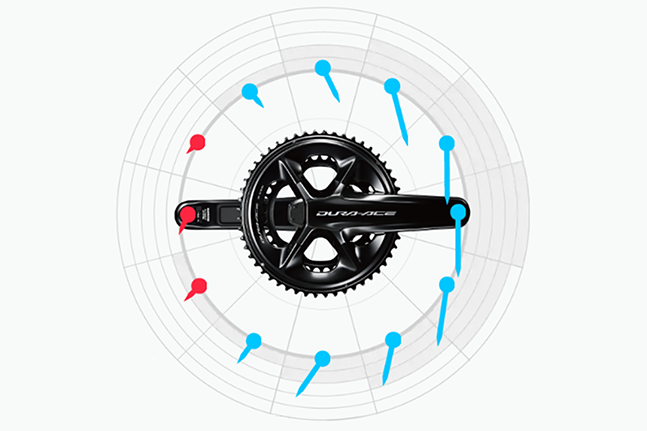
If you have spent any time on a group ride, you have heard someone reference their watts the way other people mention the weather. Power data has become the default language of structured cycling training, and it filters down from WorldTour teams to local Cat 4 fields faster every season. The question for most competitive age-groupers is not whether power meters work. It is whether the investment makes sense for someone who is not chasing a contract, just a faster bike split.
The honest answer depends less on your race category and more on how you currently train. A power meter is a precision instrument. Its value is proportional to how precisely you use it.
What a Power Meter Actually Measures
A power meter calculates wattage from torque (how hard you push the pedals) multiplied by cadence (how fast they turn). Unlike heart rate, which lags behind effort by 10 to 30 seconds and drifts upward from heat, dehydration, and accumulated fatigue, power output is instantaneous and unaffected by wind, road grade, drafting, or how well you slept. A 280 watt effort is 280 watts whether you are climbing into a headwind or sprinting on flat tarmac.
This is the core argument for power-based training. Pace and heart rate are proxies for effort. Power is the effort.
For an age-grouper training off RPE or heart rate zones, that distinction matters most in three places: pacing a time trial or triathlon bike leg without blowing up, executing interval sessions at a precise, repeatable intensity, and quantifying fitness gains over a training block instead of guessing from how a ride felt.
The Real Cost Breakdown in 2026
Power meter pricing has compressed significantly over the past several years, which is the main reason adoption has spread well beyond sponsored athletes. Three categories dominate the current market, each with a different accuracy and durability profile.
Pedal-based systems sit in the $500 to $1,100 range for dual-sided models, with single-sided options starting lower. Their main advantage is portability. Pedals swap between bikes in minutes, which matters if you split time between a road bike, a TT rig, and an indoor trainer setup. Accuracy on the better dual-sided units runs around plus or minus one percent.
Crank-based systems range from roughly $380 for single-sided left-arm units up to $875 for dual-sided setups, and they bolt directly onto your existing crank or replace it outright. They are generally more weather-sealed than pedals since there is less exposed moving hardware, but they are bike-specific, so moving the meter to a second bike means a bigger reinstall.
Spider and hub-based systems sit between the two, measuring at the crank spider or rear hub rather than left or right individually. These tend to offer strong reliability for riders who are not switching meters between bikes often.
A single-sided meter measuring only the left leg and doubling the output is the most budget-friendly entry point, but it assumes roughly even left-right power distribution, which is not true for every rider, particularly those with a history of unilateral injury. Dual-sided meters cost more but report left-right balance independently, which has real value for technique work, not just total wattage.
Who Actually Gets Their Money's Worth
A power meter rewards structure. If you already follow a periodized plan with defined interval targets, do regular FTP or threshold testing, and review your data after key sessions, a power meter converts that existing discipline into precision. You will hit intervals at the intensity you intended, pace races to your actual threshold rather than a feel-based guess, and have a clean, comparable number to track fitness changes month over month, independent of conditions.
If you ride mostly by feel, do not follow a structured plan, and are not planning to act on the data between rides, a power meter becomes an expensive number on a screen. The hardware does not improve your training. What you do with the numbers does.
A useful gut check: if you already know your current FTP from a recent field test, plan your weekly intervals around specific zones, and would actually open Training Analytics or a platform like TrainingPeaks to review a session, the investment pays for itself within a season through better-targeted training and more accurate pacing on race day. If none of that describes your current routine, a power meter will sit underused, and a heart rate strap paired with consistent RPE tracking will get you most of the same training benefit at a fraction of the cost.
Pedal, Crank, or Spider: Matching the Type to Your Setup
For riders who own one bike and race it for everything, a crank or spider-based meter offers the best accuracy-to-cost ratio with no compatibility headaches. For triathletes who train and race on a dedicated TT bike but also ride a road bike for group sessions, pedal-based meters are worth the premium since they move between bikes without reinstalling crank hardware or recalibrating from scratch each time.
Dual-sided accuracy claims around one percent are now common across multiple manufacturers, and at that level the differentiator is less raw precision and more battery life, weatherproofing, and how the companion app handles calibration drift over a season. Single-sided units run closer to 1.5 percent accuracy and a meaningfully lower price, which makes them a reasonable entry point if budget is the binding constraint rather than data depth.
Power Data and Your Training System
A power meter is only as useful as the system interpreting it. Raw watts on a head unit during a ride tell you something in the moment, but the real value compounds when that data feeds into a structured training load model. Triforge's Training Analytics pulls power data in automatically through Strava, Garmin, and Wahoo integrations, so every ride contributes to your acute and chronic training load picture without manual entry. Race Lab uses that same data to flag the specific limiter holding back your next race performance, whether that is an aerobic base gap, a pacing problem, or an overreach pattern building across weeks.
This is where a power meter earns out its cost fastest: not from owning the hardware, but from the quality of the training decisions it enables once the data is actually being used.
Frequently Asked Questions
Is a power meter worth it for a beginner cyclist?
Generally no, not yet. Beginners benefit more from building consistent volume and basic fitness than from precision pacing data. A power meter delivers the most value once you are already following structured training and need to execute specific intensities accurately.
How accurate do power meters need to be for training purposes?
For structured training and racing, plus or minus one to two percent is the practical standard. What matters more than absolute accuracy is consistency: a meter that reads the same watts for the same effort every time lets you track real fitness trends, even if its absolute number differs slightly from a different brand.
Should I buy a single-sided or dual-sided power meter?
Dual-sided is preferable if you have a history of asymmetric injury, want left-right balance data for technique work, or simply want the most complete picture. Single-sided is a sound budget choice for riders with no known imbalance who mainly want a reliable total wattage number for pacing and interval work.
Can I move a power meter between my road bike and TT bike?
Pedal-based power meters are built for exactly this and swap in minutes. Crank and spider-based meters are bike-specific and require a more involved reinstall, so they suit riders who race and train primarily on one bike.
Do I need a power meter if I already train with heart rate?
Not necessarily, but the two measure different things. Heart rate reflects physiological strain and lags behind effort, while power is a direct, instantaneous measure of output. Many competitive athletes use both together: power for pacing and interval precision, heart rate for monitoring fatigue and recovery status.
The Bottom Line
A power meter is worth it for amateur cyclists who already train with structure and will use the data to make specific decisions about intensity, pacing, and progression. It is not worth it for riders who are not yet ready to act on the numbers it produces. Buy the hardware once the training system around it is ready to use it.