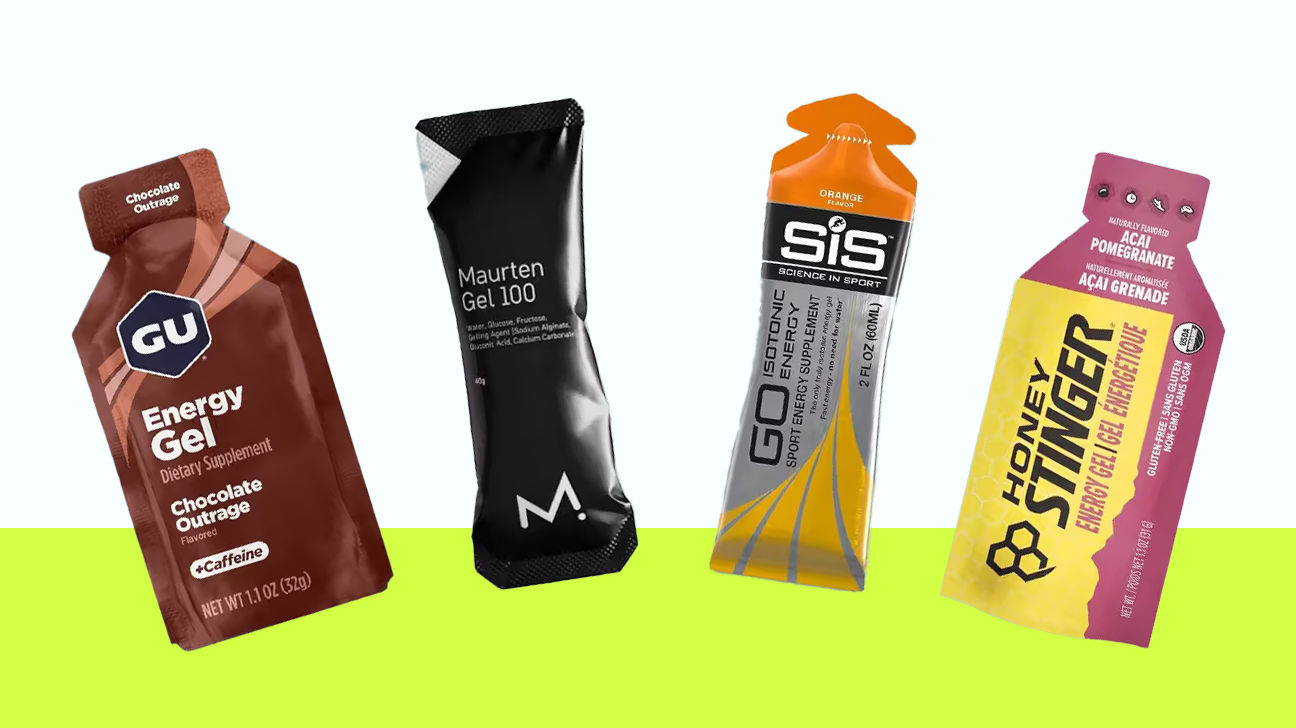
Not all energy gels are the same formulation, and that difference matters more than most athletes realize. The carbohydrate blend, osmolality, sodium content, caffeine dose, and viscosity each interact with your physiology in ways that compound across long efforts. A gel that works well on the bike may cause significant GI distress on a run. A caffeine dose that sharpens focus at hour two of a century ride may push heart rate above threshold in the back half of a 10K. Choosing a gel isn't brand loyalty, it's matching a product's formulation profile to the physiological demands of a specific sport and effort duration.
This guide breaks down what's actually in a gel, the science behind carbohydrate absorption, and the sport-specific variables that should drive your selection.
What's Actually Inside an Energy Gel
Most gels deliver somewhere between 20 and 25 grams of carbohydrate in a 30–40 ml packet. Beyond that shared baseline, the formulations diverge significantly.
Carbohydrate sources are the most consequential variable. Gels typically draw from maltodextrin, glucose, fructose, or some combination of these. Maltodextrin is a polysaccharide, long chains of glucose that break down rapidly in the gut and deliver glucose into the bloodstream at rates comparable to pure glucose, but with lower osmolality (meaning less water is drawn into the gut). Fructose is metabolized through a separate intestinal transporter and processed primarily in the liver before entering circulation as glucose. The practical upshot of these pathways matters enormously for fueling strategy.
Sodium content varies from near-zero to around 200mg per gel. Sodium accelerates intestinal glucose uptake via the SGLT1 co-transporter and helps maintain plasma volume during sweat losses. Gels marketed for long-distance racing or hot-weather efforts tend to sit toward the higher end of this range.
Caffeine appears in some gels at doses ranging from 25mg to 100mg. It functions as a central nervous system stimulant and a peripheral vasoconstrictor, with demonstrated performance benefits at doses of approximately 3–6mg per kilogram of body weight. Many athletes manage their caffeine intake strategically across a race rather than consuming it uniformly from the start.
Electrolytes potassium, magnesium, appear in smaller amounts and are secondary to sodium for acute performance purposes, though they matter more across multi-hour events.
The Dual-Transporter Model and Why It Changes Your Fueling Ceiling
The intestinal absorption of carbohydrate is rate-limited by transporters in the gut wall. SGLT1 handles glucose (and maltodextrin-derived glucose), with a maximum absorption capacity of roughly 60 grams per hour. GLUT5 handles fructose independently, with a ceiling around 30–40 grams per hour.
When you consume carbohydrate from a single source, pure glucose or maltodextrin only, you saturate SGLT1 at approximately 60g/hr. Adding fructose opens a second transport channel, allowing total carbohydrate absorption to approach 90g/hr in well-trained athletes. This is why high-end gels and sports nutrition products increasingly use a 2:1 maltodextrin-to-fructose ratio, and why some ultra-endurance formulations push to ratios as aggressive as 1:0.8 for efforts exceeding four hours.
The ceiling matters. During a four-hour ride, the difference between 60g/hr and 90g/hr absorbed is 120 grams of carbohydrate, approximately 480 kcal. For athletes competing at intensity, that's not marginal.
Practical implication: if you are fueling efforts longer than 2.5 hours at moderate-to-high intensity, you want a gel formulated with a dual-carbohydrate blend, not one built solely on maltodextrin.
Isotonic vs. Concentrated: Osmolality Matters
A gel's osmolality, the concentration of dissolved solutes, determines how much water your gut needs to process it. Isotonic gels are pre-diluted to roughly match the osmolality of blood plasma (around 280–300 mOsm/kg), meaning they can be taken without additional water. Concentrated gels sit at significantly higher osmolality and require water to be absorbed efficiently.
The distinction has real consequences:
Concentrated gels taken without water draw fluid from intestinal cells into the gut lumen to dilute the formulation before absorption. In a well-hydrated athlete this is manageable. In a dehydrated or heat-stressed athlete, this osmotic response contributes to GI distress, bloating, and delayed gastric emptying, the main reasons athletes abandon their fueling strategy mid-race.
Isotonic gels eliminate this requirement. They are more convenient in situations where access to water is unpredictable and may be better tolerated by athletes with sensitive GI systems. The trade-off is a larger packet volume and, in some formulations, slightly lower carbohydrate density per gram of product weight.
For most athletes: if you will reliably drink water alongside a gel, a concentrated formula is fine and typically offers better carbohydrate density. If your water access is uncertain, particularly in open-water-to-run transitions in triathlon or technical cycling segments, isotonic gels reduce execution risk.
Caffeine: Strategic Use, Not Default
Caffeine in gels is a performance lever, but only if used with precision. The common mistakes are starting too early, using it too frequently, and treating caffeinated and non-caffeinated gels as interchangeable.
Caffeine's ergogenic effect peaks approximately 30–60 minutes after ingestion. For running, this makes it most valuable in the second half of a race, when central fatigue becomes the primary limiter. For cycling, it is useful throughout moderate-intensity efforts but should be dosed against total daily intake to avoid the paradoxical rise in perceived exertion and elevated heart rate that accompanies overconsumption.
A practical framework:
- Efforts under 60 minutes: caffeine is often more beneficial pre-workout (coffee, pre-workout caffeine) than in-workout via gel, since the timing window is too short to justify the cost of a caffeinated product mid-effort
- Efforts 60–120 minutes: one caffeinated gel timed around the 45–60 minute mark captures the stimulant effect in the back half of the effort
- Efforts over 2 hours: timed, strategic use beginning around hour 1.5 and potentially repeated around hour 2.5–3 depending on total dose relative to bodyweight
- Late-day training: caffeinated gels consumed within 6 hours of sleep are likely to impair sleep quality, suppressing training adaptation. Non-caffeinated gels should be the default for evening sessions
Note that caffeine-naive athletes respond more strongly to lower doses. Regular coffee drinkers requiring meaningful performance benefit may need doses at the upper end (75–100mg per gel) to exceed habitual tolerance.
Sport-Specific Considerations
Running
GI stress is the primary constraint in run fueling. The mechanical impact of running compresses the gut repeatedly and shifts blood flow away from the GI tract toward working muscles. Both effects impair gastric emptying and increase the likelihood of GI distress.
The practical implications for gel selection:
Prefer isotonic or well-diluted gels. Taking a concentrated gel without adequate water on a run compounds gut stress. If you use concentrated gels, match each one with 150–200ml of water and slow or stop briefly to consume it, particularly in the heat.
Lower fructose may be better tolerated by sensitive runners. Fructose absorption through GLUT5 is less efficient and more variable across individuals. Athletes who regularly experience GI issues while running should trial gels with lower fructose content before assuming all carbohydrate fueling is problematic.
Gel frequency and training. Running gut stress is trainable. Consuming gels consistently during long runs, even when you don't feel like you need them, conditions the GI tract to absorb carbohydrate under mechanical stress. Showing up to a race having never practiced in-run fueling is a significant execution risk.
Timing window is tighter. Running pace makes it harder to safely open, consume, and manage a gel packet compared to cycling. Thin-nozzle or pre-opened gels reduce the execution burden.
Cycling
Cycling is the most forgiving sport for fueling. Seated position, no GI-compressing impact, and the ability to slow briefly or freewheel while eating all reduce stress on the gut. This creates more latitude in gel selection.
Higher carbohydrate rates are achievable. Cyclists doing multi-hour rides can realistically push toward 90g/hr with appropriate dual-source gels and gut training. For endurance cycling, higher-carbohydrate-density gels, or combining gels with solid food and chews, is often the most efficient strategy.
Concentration tolerance is higher. Concentrated gels are generally well-tolerated on the bike when paired with a consistent drinking habit. Cyclists who sip every 10–15 minutes provide ongoing gut hydration that offsets the osmotic demands of a concentrated gel.
Sodium becomes more important in longer efforts. In rides exceeding 3 hours, particularly in warm conditions, sodium from gels (and other sources) helps sustain plasma volume and maintain intestinal glucose transport via SGLT1. Gels with 100mg+ sodium per packet are worth prioritizing for long rides.
Pockets and portability. Cycling kit allows you to carry multiple gels and plan fueling in advance. There's no practical argument for limiting fueling choice based on portability, the constraint that matters in running doesn't apply here.
Triathlon
Triathlon introduces a complexity the other sports don't: discipline transitions and a fueling strategy that must bridge swimming, cycling, and running without a break in external input.
The swim is carbohydrate-neutral. Most triathletes consume nothing during the swim. Depending on swim duration and overall race length, this creates a deficit that the bike leg must address.
The bike is the primary fueling window. In any triathlon from Olympic distance upward, the bike leg is where the majority of carbohydrate should be consumed. This is the most GI-tolerant phase and provides the longest window. Gels should be timed consistently through the bike, particularly in the first half where gut tolerance is highest before pre-run anxiety and transition stress begin to activate the sympathetic nervous system.
Transition is a reset point. A gel consumed just before T2 (or immediately after dismounting) provides carbohydrate that will be partially absorbed during the first kilometers of the run. This is a useful timing strategy, particularly in Olympic and 70.3 formats where the run pace is high and the window to fuel while running is narrow.
Front-load caffeine on the bike, not the run. Caffeinated gels consumed on the bike will peak in the bloodstream during the run, a deliberate delay that serves the athlete well. Waiting to take caffeinated gels until the run leg often means the peak effect arrives after the race is over.
GI stress accumulates. Athletes who do heavy running sessions know how gut-sensitive running can be. In triathlon, the run follows a significant mechanical and metabolic effort. Gel selection for the run leg should lean isotonic, and the total fructose load across the entire race should be considered, not just per-discipline.
Reading the Label: What Actually Matters
When evaluating a gel, prioritize these label attributes in order:
| Label Element | What to Look For |
|---|---|
| Carbohydrate sources | Dual-source blend (maltodextrin + fructose) for efforts >90 min |
| Carbs per serving | 20–25g optimal; sub-15g is low-value for the GI hit |
| Sodium | 100–200mg for longer or hotter efforts; 50mg+ acceptable for short efforts |
| Osmolality | Listed on some products; isotonic = ~280 mOsm/kg |
| Caffeine dose | 75–100mg for meaningful effect in habitual consumers; 25–50mg for low-caffeine users |
| Fructose content | Keep it lower if you have known GI sensitivity in running |
| Added ingredients | Amino acids, B vitamins, and "performance blends" are largely marketing in acute fueling contexts |
The last row matters: gel labels frequently list secondary ingredients that have little to no acute performance effect. Branch-chain amino acids (BCAAs), added vitamins, and proprietary blends are marketing, not science. The carbohydrate formulation and sodium content are the performance variables.
Gut Training Is Non-Negotiable
Gut tolerance is an adaptation. Athletes who train regularly with gels, across long runs and rides, develop faster gastric emptying, improved intestinal absorptive capacity, and reduced GI symptom frequency at a given carbohydrate intake rate. Athletes who don't practice fueling in training and then attempt race-day carbohydrate rates of 60–90g/hr often experience distress that has nothing to do with the gel formulation and everything to do with an untrained gut.
The practical prescription: consume gels in training, consistently. Start at lower rates (30–40g/hr) if you're new to in-workout fueling and build toward race-day target rates over 8–12 weeks. Match the product you train with to the product you'll race with where possible, novel formulations consumed at high rates under race-day stress are a predictable source of GI problems.
FAQ
What is the best energy gel for running? The best running gel is one you've practiced with and that your gut tolerates under the mechanical stress of impact. Isotonic gels (or concentrated gels taken with water) with a dual-carbohydrate blend (maltodextrin + fructose) and moderate sodium (100mg+) are the best starting point for efforts over 60 minutes.
Can I take energy gels without water? Isotonic gels are designed to be taken without water. Concentrated gels should be followed with 150–200ml of water to avoid drawing fluid into the gut and slowing absorption. Taking concentrated gels repeatedly without water, particularly during running, is a common cause of GI distress.
How often should I take a gel during a race? Target frequency depends on gel carbohydrate content and your hourly fueling goal. For a 60–75g/hr target using 22g gels, that's roughly one gel every 18–20 minutes. Most athletes use a timing cue (watch alarm) rather than relying on hunger or fatigue signals, which are delayed and unreliable indicators of carbohydrate need.
Do I need caffeine in my gels? No, but strategic caffeine use during longer efforts is well-supported by research. The decision depends on your total daily caffeine habits, your sensitivity, race duration, and time of day. If you use it, plan the timing in advance rather than consuming caffeinated gels reactively when you feel tired.
Are expensive gels worth the price premium over cheaper options? Sometimes. Higher-cost gels often use more sophisticated carbohydrate blends, better osmolality management, and more palatable textures, all of which have real performance implications. Compare label formulations rather than price. A cheaper gel with a dual-carb blend and adequate sodium may outperform a premium gel built on a single carbohydrate source.
What's the difference between a gel and a chew or drink mix? All three deliver carbohydrate; the format affects timing, convenience, and gut osmolality. Gels offer concentrated, fast carbohydrate delivery with a defined dose. Chews require chewing and are harder to take at high intensity but may be more palatable over long efforts. Drink mixes distribute carbohydrate alongside fluids, reducing the osmolality burden on the gut, a significant advantage in hot conditions. Many athletes combine formats across long efforts.
by Gel Type & Sport Context