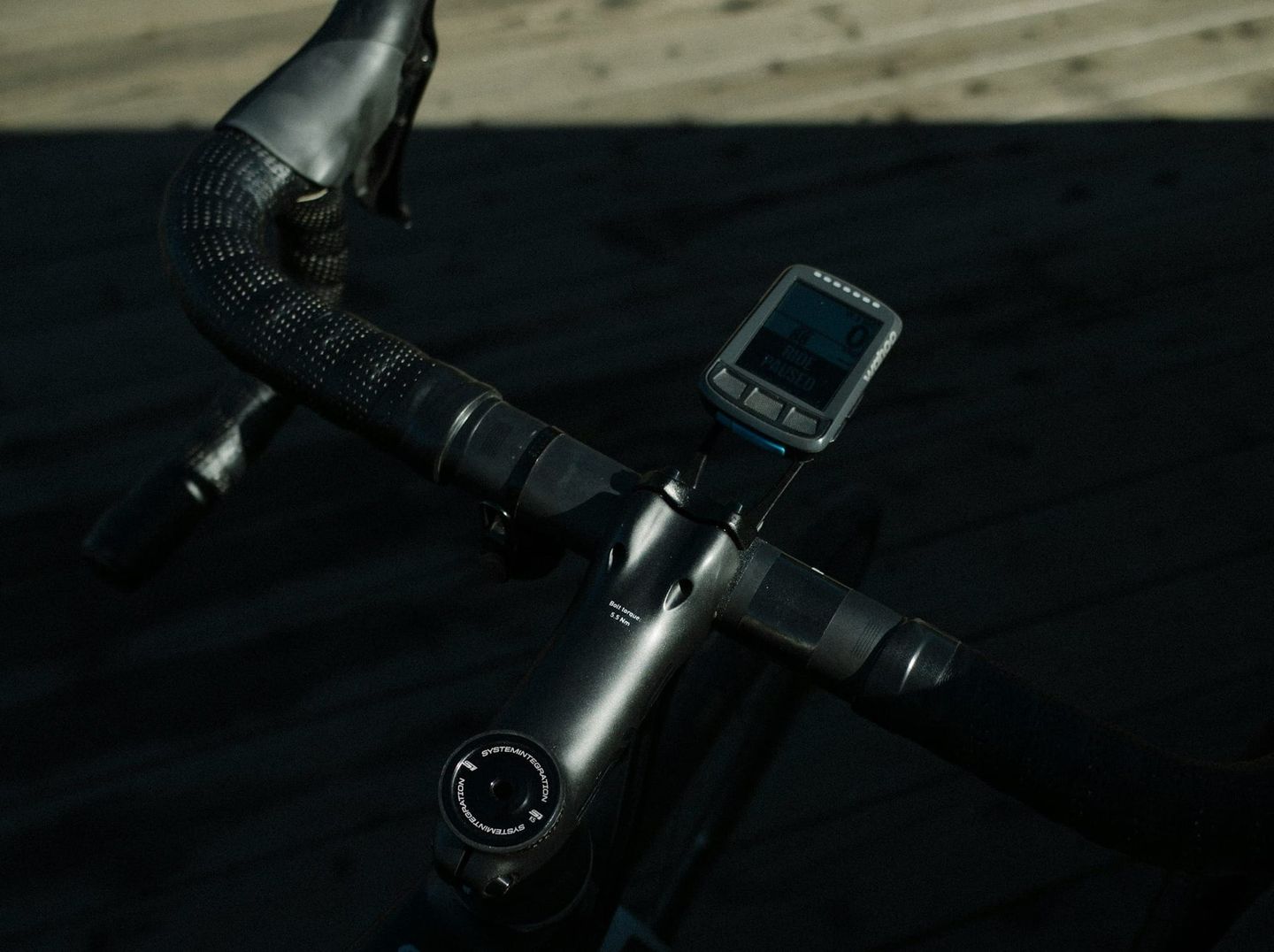
Most triathletes already own a GPS watch. It sits on your wrist through every swim, run, and brick session, logs your data, and syncs to your training platform without you thinking twice. So when someone asks whether you really need a dedicated bike computer on top of that, the honest answer is: it depends on what you're trying to get out of the bike leg.
This is not a question with a clean universal answer. It comes down to your training volume on the bike, how seriously you're chasing power data, your race distances, and what friction points you're actually willing to tolerate on long rides.
What a GPS Watch Does Well on the Bike
A quality GPS multisport watch, whether you're running a Garmin Forerunner 965, a COROS VERTIX 2S, or a Wahoo ELEMNT Rival, gives you a surprisingly complete cycling picture. You get GPS speed, distance, heart rate, and if you pair a power meter, real-time power data. Structured workouts sync from platforms like TrainingPeaks or Garmin Connect and execute cleanly. Laps, alerts, and auto-pause all work.
For athletes training 8 to 12 hours per week with a balanced swim-bike-run split, this is often enough. The bike leg of a sprint or Olympic triathlon is 40 to 90 minutes. You don't need a six-inch screen to stay on target power or pace.
The other thing a watch does that a bike computer cannot is stay on your wrist through T2. Your transition time, your run pace, your overall elapsed time from gun to finish: all captured without touching anything. In a triathlon context, the seamless multi-sport continuity of a watch is a genuine advantage that a head unit simply cannot replicate.
Where a Dedicated Bike Computer Earns Its Place
The limitations of a GPS watch on the bike are real, and they compound at higher volumes and longer race distances.
Screen size and data density. A 1.4-inch watch face shows you three to four data fields comfortably. A Garmin Edge 840 or Wahoo ELEMNT Bolt shows eight to ten fields across two screen pages, at a glance, while you're in aero position. For an Ironman bike leg where you're managing power, heart rate, normalized power, kilojoules, nutrition timing, wind direction, and segment-by-segment pacing, the information architecture of a dedicated head unit is meaningfully better. You make fewer errors. You stay in the data without hunting for it.
Navigation and mapping. If your race course is technically demanding or your training routes are complex, turn-by-turn navigation on a full mapping head unit (Garmin Edge 1040, Karoo 3) is in a different category from a watch screen. Glanceable, color-coded elevation profiles. Rerouting when you miss a turn. Hazard alerts from other riders. None of this is available on a watch at the same quality level.
Battery life at full recording depth. Watches handling GPS plus power plus heart rate on a high-accuracy setting typically run 15 to 25 hours depending on the model. That sounds like plenty until you're doing a multi-day training camp, back-to-back long rides, or a full Ironman preceded by a 3.8km swim with GPS active. A dedicated bike computer stays on the bike and draws its own battery without pulling from your watch reserves. Your watch arrives at T2 with charge to spare for the marathon.
Dedicated power meter pairing and smoothing. High-end bike computers handle dual-sided power, left-right balance, torque efficiency, and pedal smoothness data more reliably and with better smoothing algorithms than a wrist-based device. If you're doing serious threshold work or pacing an Ironman bike leg tightly, the granularity matters.
The Real Cost Calculation
Before you conclude that a dedicated bike computer is the obvious upgrade, run the actual numbers.
A mid-tier GPS multisport watch that handles cycling decently costs $400 to $600. A quality dedicated bike computer starts at $300 for a Wahoo ELEMNT Bolt or Garmin Edge 540 and runs to $700 or more for a fully loaded mapping unit with premium routing features. If you already own a solid watch, adding a bike computer is an incremental $300 to $700 spend for benefits that are real but not transformative for most age-groupers.
The question is where that money produces more output. For most athletes training sub-12 hours per week at Olympic or 70.3 distance, the honest answer is often: a better power meter, a bike fit, or a coaching platform gives you more return than a head unit upgrade.
If you're racing full Ironman, training 14-plus hours per week, or doing any kind of serious bike navigation, the calculation flips.
Feature Comparison: What Actually Matters
The table below covers the metrics that triathletes actually use in training and racing, not the feature lists marketing teams highlight.
| Feature | GPS Watch | Dedicated Bike Computer |
|---|---|---|
| Multi-sport continuity (T1/T2) | Seamless | Requires manual lap/stop |
| Screen real estate | Limited (1.3 to 1.6 inch) | Large (2.0 to 3.5 inch) |
| Data fields visible at once | 3 to 4 | 8 to 10 |
| Structured workout execution | Good | Excellent |
| Power meter pairing | Good | Excellent |
| Turn-by-turn navigation | Basic | Full mapping |
| Battery life (GPS + power) | 15 to 25 hours | 15 to 40 hours (model dependent) |
| Aero bar mount readability | Difficult | Purpose-built |
| Race-day weight | Wrist only | Adds 70 to 120g to cockpit |
| Cost (standalone) | $400 to $600 | $300 to $700 |
The Dual-Device Setup
A significant number of age-groupers at the 70.3 and Ironman level run both devices, and this is often the right answer if budget allows. The watch handles swim timing, transition timing, and run tracking. The bike computer handles the entire bike leg in detail. The watch sits on your wrist in sport mode with display locked; it records the bike leg but you're not looking at it.
The integration works cleanly if you're using Garmin-to-Garmin or syncing both to the same platform. Wahoo, Polar, and COROS all support similar workflows. You get the best data architecture for each discipline and you don't have to make trade-offs.
The downside is cost and one more device to charge, mount, and manage on race day. If that friction costs you mentally, simplify. A well-configured watch handles everything most age-groupers need.
Recommendations by Athlete Profile
Sprint and Olympic distance, up to 12 hours per week: A quality GPS multisport watch is all you need. Pair a power meter to the watch, set your target zones, and race. The bike leg is short enough that screen limitations don't compound into meaningful errors.
70.3, 12 to 16 hours per week: This is the grey zone. If you race with power and your courses are non-trivial, a mid-tier bike computer (Edge 540, ELEMNT Bolt) adds genuine value. If you're comfortable with your watch setup and not navigating complex routes, stay with what you have and invest elsewhere.
Full Ironman or high-volume training: A dedicated bike computer is worth it. You're managing 5 to 6 hours of data, navigation, and pacing precision in a context where display quality and battery confidence matter. Garmin Edge 840 or 1040, Wahoo ELEMNT Roam, or Hammerhead Karoo 3 are all legitimate choices at this level.
Athletes doing multi-day training camps or frequent group rides: A bike computer pays off in navigation, route sharing, and not having to think about watch battery on a 150km day.
One Practical Note on Race-Day Setup
Whichever setup you run, practice it in training. T1 under pressure is not the moment to figure out whether your bike computer auto-pauses when you dismount or whether your watch is still recording the bike leg when you rack. Build the routine in training. Know exactly what you're pressing, when, and why.
If you're using both devices, decide in advance which one is your primary source of truth for pacing and which is backup. Conflicting pace or power readings between devices mid-race is a focus tax you don't need.
Bottom Line
A GPS watch is not a compromise; it's a capable tool that covers the full triathlon discipline set with a single device. The case for a dedicated bike computer is real, but it's strongest for longer distances, higher training volumes, and athletes who want maximum data density on the bike leg.
If you're unsure, start with a power meter before a bike computer. Accurate power is the variable that most changes how effectively you train and race on the bike, regardless of what screen it feeds into.
Triforge Equipment Guide
GPS Watch vs. Bike Computer