

Energy balance is the foundation of triathlon nutrition. It sits at the base of the pyramid for a reason, get this wrong and everything else built on top of it crumbles. Yet one of the most common issues we see with athletes isn't overindulgence. It's chronic undereating.
Most athletes never stop to ask themselves: Am I actually eating enough?
The reasons vary. Pressure to stay lean. Diet culture. The belief that lighter automatically means faster. And while there's truth to the idea that body composition can influence performance, there's a tipping point, one where too few calories actively work against you. Muscle loss, poor performance, and even fat preservation can result. The exact opposite of the goal.
Triathlon training demands a serious amount of energy. Not just to fuel sessions and support recovery, but to keep your body functioning day to day. Understanding energy balance isn't optional for a triathlete, it's essential.
What Is Energy Balance?
At its simplest: energy in vs. energy out.
Energy in is what you consume through food and drink. Energy out, your Total Daily Energy Expenditure (TDEE) - is everything your body burns across the day. That includes:
- Basal/Resting Metabolic Rate (BMR/RMR): The calories burned just keeping you alive, around 70% of TDEE
- Thermic Effect of Feeding (TEF): Calories burned digesting food around 10%
- Non-Exercise Activity Thermogenesis (NEAT): Daily movement outside of training around 15%
- Planned exercise (swimming, cycling, running) around 5%
Notice that last figure. Exercise itself is a relatively small slice of your total burn. The bulk of your calories are going to basic metabolic function. So when intake is too low, it's not just training that suffers, it's everything. Hormones, immunity, bone health, cognition. The body will protect its core functions by sacrificing the rest.
What Is Low Energy Availability?
Energy availability (EA) is what's left over for your body after accounting for exercise. Low EA, or energy deficiency, is when that remainder isn't enough to support both bodily function and training load.
The recommended threshold for female athletes is ~45 kcal per kg of fat-free mass (body mass minus fat mass). To put that into context:
A 70kg female athlete with 22% body fat has 54.6kg of fat-free mass. Her baseline energy availability target: 45 × 54.6 = 2,457 kcal. Add a 500 kcal training session, and her daily requirement becomes 2,957 kcal, before accounting for any additional sessions.
If she's been targeting 1,500 calories, she's in a significant deficit without even realising it.
In triathlon, this problem compounds quickly. Multi-session days, long bricks, back-to-back training blocks, the calorie requirements on these days are substantial, and failing to meet them consistently leads to chronic underfuelling.
Signs of low energy availability include poor training performance, low concentration, persistent fatigue, irregular or absent periods, frequent injury, and stress fractures.
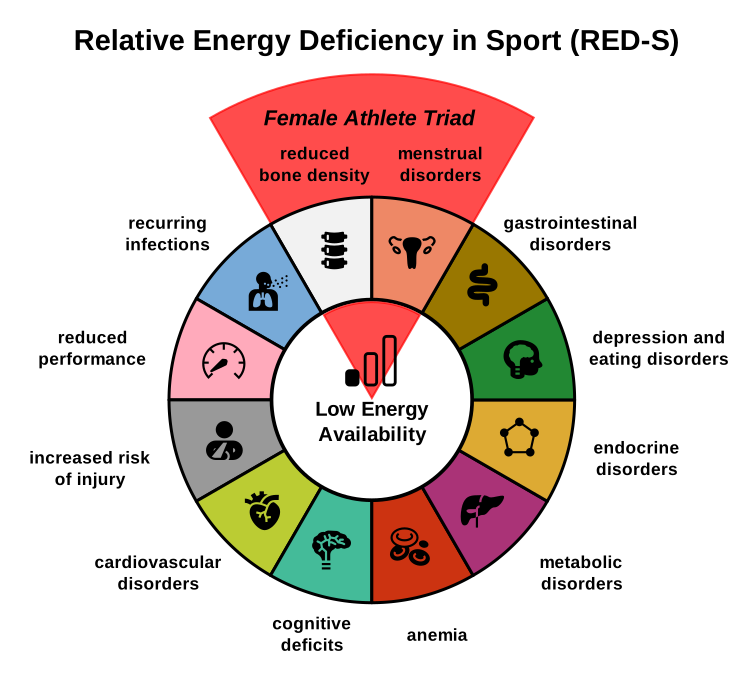
The Female Athlete Triad and RED-S
Low EA sits at the centre of two serious conditions that every triathlete should understand.
The Female Athlete Triad connects three interrelated issues: low energy availability (intentional or not), menstrual irregularities or loss of period, and reduced bone mineral density. Long-term consequences include compromised fertility, increased cardiovascular risk, and osteoporosis.
Relative Energy Deficiency in Sport (RED-S) broadens this picture to include male athletes too. It encompasses a wider range of health consequences, reduced metabolic rate, impaired protein synthesis, cardiovascular health decline, all stemming from chronic low EA.
Both conditions are preventable. And addressing them starts with nutrition.
How to Reduce the Risk
Know your numbers. Start by logging your food and drink intake alongside your training. Tools like MyFitnessPal, Garmin, or TrainingPeaks integrations can give you a baseline. From there, you can identify gaps and start making adjustments.
Listen to your body. Track how you're feeling, energy levels, sleep quality, recovery, mood. These are signals. Don't ignore them.
Track your cycle. For female athletes, apps like WildAI can provide a useful picture of how training, nutrition, and recovery interact across the month.
How to Eat More Without Overwhelm
If your logs reveal you need more calories, here's where to start.
Don't fast. Intermittent fasting and fasted training sessions carry real risk for athletes training at volume. Skipping meals and restricting entire food groups, carbs, fats, creates unnecessary physiological stress, raises cortisol, and can begin to suppress core biological functions. Don't skip breakfast. Eat at regular intervals. Keep all food groups on the table.
Carbohydrates are non-negotiable. They're the primary fuel source for endurance training. Endurance athletes should be targeting carbohydrates at up to 70% of total daily calories to meet the glucose demands of high training volumes. This isn't negotiable, carbohydrate availability is directly linked to performance, training adaptation, and bone health.
Don't fear fat. Healthy fats support hormones, cell function, and vitamin absorption, and they're calorie-dense without adding bulk. A tablespoon of nut butter in a smoothie, olive oil over vegetables, avocado alongside a meal, these small additions can meaningfully close a calorie gap without requiring enormous food volume.
Plan ahead. Meeting high calorie targets doesn't happen by accident. Map out your daily meals and snacks, including your pre-, during, and post-training nutrition.

Training Nutrition: The Basics
In addition to your regular meals, use these guidelines around sessions:
- Pre-training: 1g of carbohydrate per kg of body weight, 2 hours before
- During training: ~10oz of fluid with electrolytes and ~5% carbohydrate every 20 minutes
- Post-training: 1.5g of carbohydrate per kg of body weight and 15–25g of protein within the first 30 minutes
Energy gels, bars, and electrolyte drinks can be useful tools for hitting these targets during and around training, particularly on longer sessions.
The Bottom Line
Underfuelling is one of the most common and most overlooked mistakes in triathlon. The training hours you're putting in demand a serious calorie investment, and cutting that investment short will cost you in performance, health, and longevity in the sport.
Build your nutrition from the foundation up. Get energy balance right first, and everything else follows.